TITANIUM, RADON, PHOSPHORUS, BROMINE, CARBON
Titanium
 |
| Picture of raw titanium |
|
The element titanium was discovered by William Gregor in 1791. It was discovered in the United Kingdom. Some of the uses of titanium are of the following :
- Many firearms (guns) are made from titanium as it is strong and lightweight.
- Surgical instruments, wheelchairs and crutches are all made out of titanium for high strength and low weight.
- Titanium alloys are used in aircraft (including helicopters), armor plating, naval ships, spacecraft and missiles.
- Dental implants are made with titanium.
Some interesting facts about titanium is that it was discovered in 1791, but the first pure titanium was produced in 1910 by Matthew A. Hunter. Titanium
Titanium is a strong, light metal. It is as strong as steel and twice as strong as aluminum, but is 45% lighter than steel and only 60% heavier than aluminum.
Source one Source two
Radon
The element, Radon was discovered by Friedrich Ernst Dorn in 1900 while studying radium's decay chain. It was discovered in Germany. Some uses of radon are :
 |
| Radon | |
- Radon was used for treating cancer by radiotherapy.
Radon is colorless, odorless, and radioactive. Most people associate with the risk of lung cancer. Radon is also very hazardous.
Source one Source two
Phosphorus
 |
| Red phosphorus |
Phosphorus was discovered in 1669 by Hennig Brand, a German physician and alchemist. Phosphorus was discovered in Germany. Uses for phosphorus are :
- Hypophosphatemia, low levels of phosphorus in the body
- Hyperceilcemia, high blood calcium levels
- Calcium based kidney stones
- Toothpastes
There are three different type of phosphorus' white, red and black.
- White is poisonous and can spontaneously ignite when it comes in contact with air.
- Red is not poisonous and is not as dangerous as white phosphorus, although
frictional heating is enough to change it back to white phosphorus.
- Black is the least reactive form of phosphorus and has no significant commercial uses.
Source one Source two Source three
Bromine
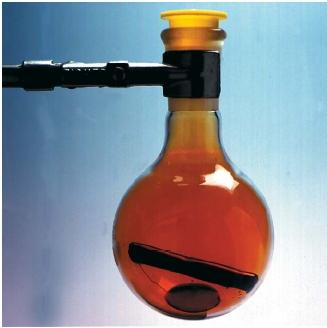 |
| Bromine |
Bromine was discovered, at almost the same time in 1826, by two men, German chemist Carl Lowig (1803-90) and French chemist Antoine-Jerome Balard (1802-76). The element bromine, was discovered in France.
- Water Purification
- Agriculture
- Cars
- Healthcare
- Photography
Bromine is toxic if inhaled or swallowed. It can damage the respiratory system and the digestive system, and can even cause death. It can also cause damage if spilled on the skin.
Source one Source two Source three
Carbon
 |
| Coal based activated carbon for water purification |
Unfortunately, no one knows who discovered carbon. It is one of the few
elements that was known since ancient times. The earliest use of carbon
was sometime around 3750 BC. Some uses for carbon are :
- Used as a decorative tool in jewelry items.
- Used as a base for the ink that is used in inkjet printers.
- Used in the rims of automobiles as a black fume pigment.
- Vegetable
carbon or activated carbon, is sometimes used as a bleaching agent, or a
gas absorbent. It is also widely used in filtration systems.
Some interesting details about carbon are that :
- Diamond and graphite are two forms of carbon. Each have very
different properties. For example, diamond is very hard while graphite
is very soft.
- Life on earth could not exist without carbon. It is part of DNA and
also makes up important sugars and fats that we need to live.
- The name ‘carbon’ comes from the Latin word ‘carbo’.
- All forms of carbon are very stable and require high temperatures to react.
Source one Source two
